Noah Angell
Author
Agent
Assistant
Biography
Noah Angell is a writer and artist who works with orally transmitted forms such as storytelling and song. His work has taken him to the north of Norway, in partnership with Polarmuseet, to work with first hand accounts of Inuit who performed in live ethnographic displays organised by local sailor Adrian Jacobsen, to North Carolina to shoot his forthcoming documentary film on gospel singer Connie B. Steadman of the Badgett Sisters, and to the British Museum in London, where for years he has collected museum workers’ testimony of the ghosts that haunt the notorious colonial museum. Angell has written lecture-performance works which have been performed internationally at spaces all around the world. Born in the US, he was resident in London for a over a decade and now lives in Berlin.
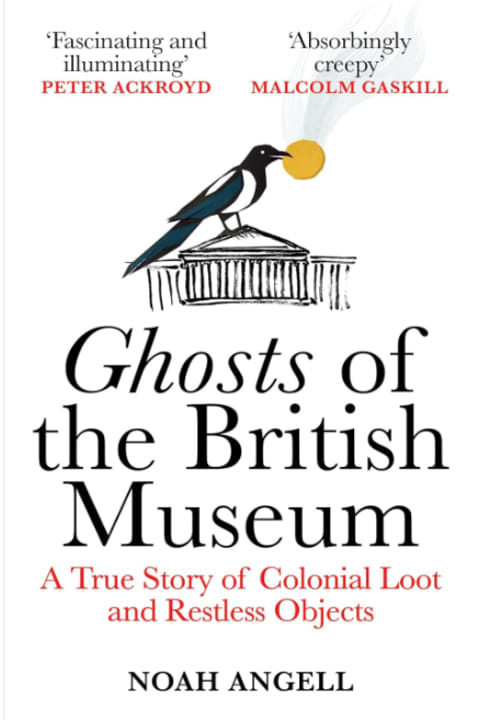
GHOSTS OF THE BRITISH MUSEUM (2024)
What if the British Museum isn’t a house of learning, but a vast sinkhole of still-bubbling historic injustice?
What if it presents us not with a carefully ordered cross section of history but is instead a palatial trophy cabinet of colonial loot swarming with volatile and errant spirits?
When artist and writer Noah Angell first heard murmurs of ghostly sightings at the British Museum he had to find out more. What started as a trickle soon became a landslide as staff old and new, from guards of formidable build to respected curators, brought forth testimonies of their inexplicable supernatural encounters.
It became clear that the source of the disturbances was related to the Museum’s contents – unquiet objects, holy plunder, and restless human remains protesting their enforced stay within the colonial collection’s cases, cabinets and deep underground vaults. Be it wraiths associated with genocides, uprooted sacred beings or the afterglow of deaths that occurred inside the museum itself, according to those who have worked there, the museum is heaving with profound spectral disorder.
Ghosts of the British Museum fuses storytelling, folklore and history, digs deep into our imperial past and unmasks the world’s oldest national museum as a site of ongoing conflict, where under the guise of preservation, restless objects are held against their will.
It now appears that the objects are fighting back.